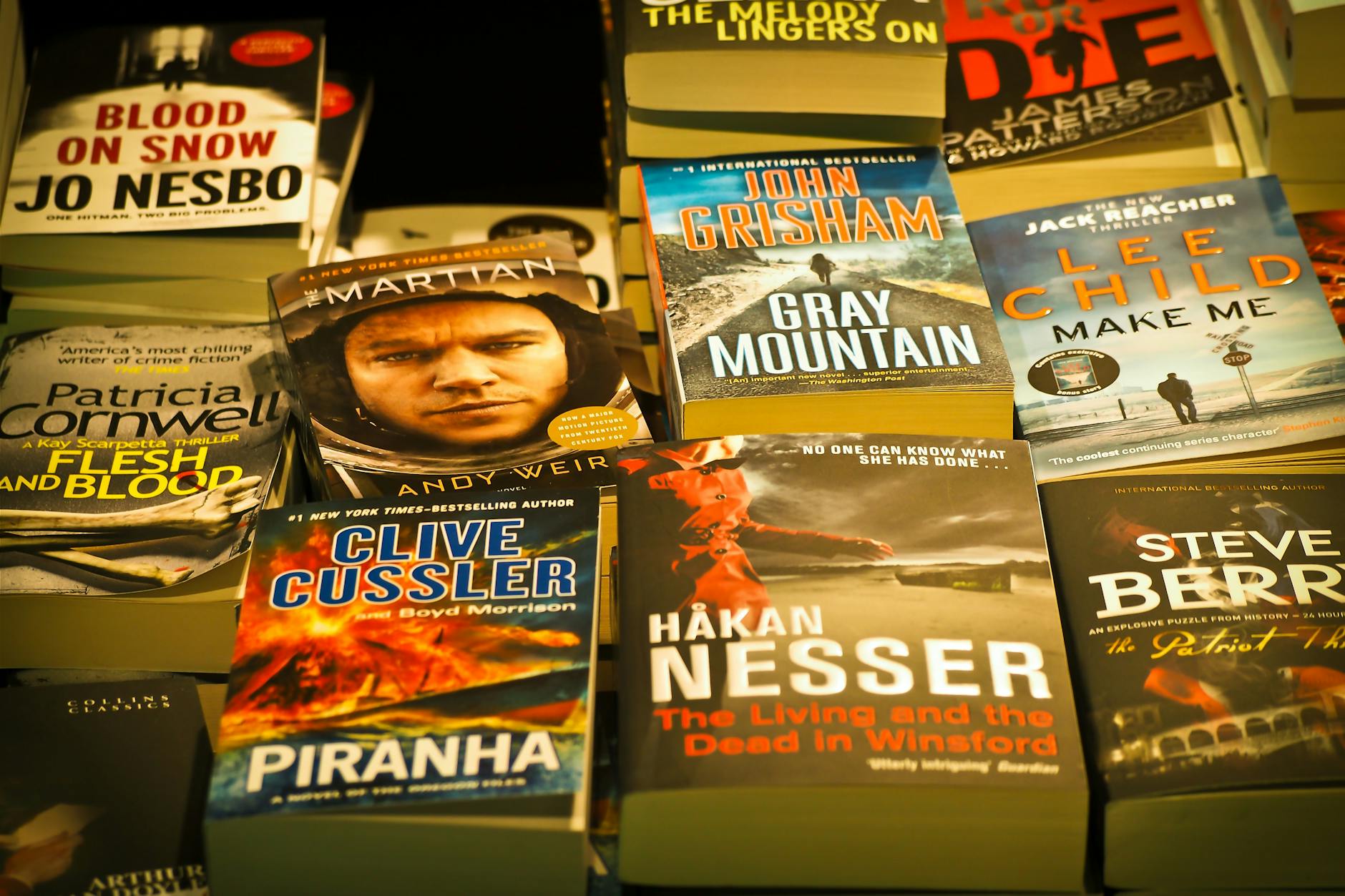
Most—if not all—writers who dared to pen their ideas have thought about publishing their works at some point or another. Those of you who are ready to make the ‘leap of faith’ must decide on whether to traditionally publish with a third party or self-publish using your own resources.
My Self-Publishing Journey
In recent decades, self-publishing has emerged as a popular means for authors of various subjects to share their work with the public. According to the Alliance of Independent Authors, self-publishing accounted for more than 30% of all recorded book sales in the United States by 2014. In 2016, $1.25 billion in sales had been generated through about 300 million self-published units in the $6-billion American book industry.
The rise of self-published works is attributable to the availability of user-friendly publishing platforms such as Amazon Kindle Direct Publishing (KDP). KDP allows users to publish and distribute paperbacks and eBooks on Amazon stores while earning royalties between 35-70%. In contrast, (Canadian) authors with a third party publisher earn a royalty rate of 10% or less, based on findings from a report commissioned by the by The Writers’ Union of Canada.
As of writing this article, my self-publishing journey starting with my debut short story anthology, The Flutist of Sinraat and Other Fantasies, is just getting underway. My decision to self-publish rather than go the traditional route of finding a literary agent to represent me and my work had been made after considerable deliberation. Here are the main reasons why I am choosing to self-publish rather than traditionally publish.
Greater Creative Control
Self-publishing provides me with greater creative control over my work. Literary agents and publishers often have stringent requirements for their ‘manuscript wishlists’ (whether written on their webpage or not). For example, some of their wishlist items can be as specific as “stunning genre-blending literary novels, which dig into time travel, secret societies, cults, superheroes, climate disasters, and more, while tackling heavy themes around family and relationships” or as vague as “speculative fiction that is layered, has a distinct voice, and is grounded in a universal emotional desire.”

If you are like me who writes with no particular audience in mind except for maybe yourself and people with similar tastes/preferences as you, it is difficult to write a story that satisfies someone else’s vision. Navigating the querying landscape to find just the right agent and publisher for you can feel like a maze.
Self-publishing allows you to bypass the need for an agent or publisher’s approval to publish your work. You have full creative license over what you want to write and publish, which is especially ideal if the themes and topics of your works fall outside what is considered marketable to commercial audiences.
To give credit where credit is due, literary agents and publishers, anecdotally speaking, have a keen eye for recognizing and rejecting manuscripts that have serious fundamental issues. Much of the negative stigma associated with self-publishing “stems from perceptions of lower quality and lack of professional oversight” due to the traditional gatekeepers (literary agents, publishing companies, etc.) being bypassed. As such, it is imperative for aspiring self-published authors to self-critique their own writing as well as get feedback from others. Check out my articles on writing tips and the importance of critique for further guidance on how to ensure your manuscript is of professional quality.
Less Time to Publish
According to the Greenleaf Book Group, the process of traditionally publishing takes about two to three years, which includes time spent on finding an agent to represent your work as well as designing and producing the physical book itself once a deal has been finalized. Self-publishing, on the other hand, may shorten the timeline to around a week to six months.
As someone who is eager to get their work ‘out there’ as soon as possible (without compromising quality), self-publishing is ideal for me to quickly realize my dream of becoming a published author. Achieving financial success as an author is a separate matter.
Things to Consider if You Choose to Self-Publish
Of course, self-publishing does not come without its challenges, the biggest one being money. In an article published by Reedsy, the total costs for self-publishing a book in 2024 is estimated to be between $2,820 and $5,360 (USD). Expenses can include editing, cover designing, marketing, web development, interior book formatting, and more.
Self-published authors are not likely to generate a full-time income through writing alone. The million-dollar success stories of self-published authors like Andy Weir, Amanada Hocking, and John Locke are outliers, and aspiring self-published authors should not expect be as financially successful as them.
In fact, a 2024 report published by the Alliance of Independent Authors states that the median income for self-published authors across Canada, the United States, and the United Kingdom was around $12,749 (USD) in 2022. Note that the respondents of the survey had been “selected for spending over 50% of their working time on writing and publishing,” so as to eliminate authors of one-off books published for friends and family.
The second biggest drawback is a lack of visibility. In particular, it is difficult for self-published authors to distribute their books through bookstores. Traditionally published authors, on the other hand, may have easy access to retail shelf-space for their books through exclusive deals between their publisher and bookstores. Securing shelf-space in bookstores as an independent author, while not impossible, involves a lot of work and research, including fostering good relationships with bookstores, understanding your and a bookstore’s target demographic, and establishing a wholesaler for returns and orders, among other logistics and considerations.
Closing Thoughts

Deciding on whether to self-publish or traditionally publish requires you to evaluate your financial position and goals as a creative writer.
For myself, I am not hell-bent on becoming a full-time, financially independent author anytime soon, though I would love to foster a dedicated fan base—even a small one—that enjoys reading my works. I am treating my self-publishing endeavors more as a passion project that I contribute to on the side while working an ordinary job. The financial rewards will come as they may.
Let me know what your thoughts on self-publishing versus traditional publishing are and which route you intend to pursue.


Leave a Reply