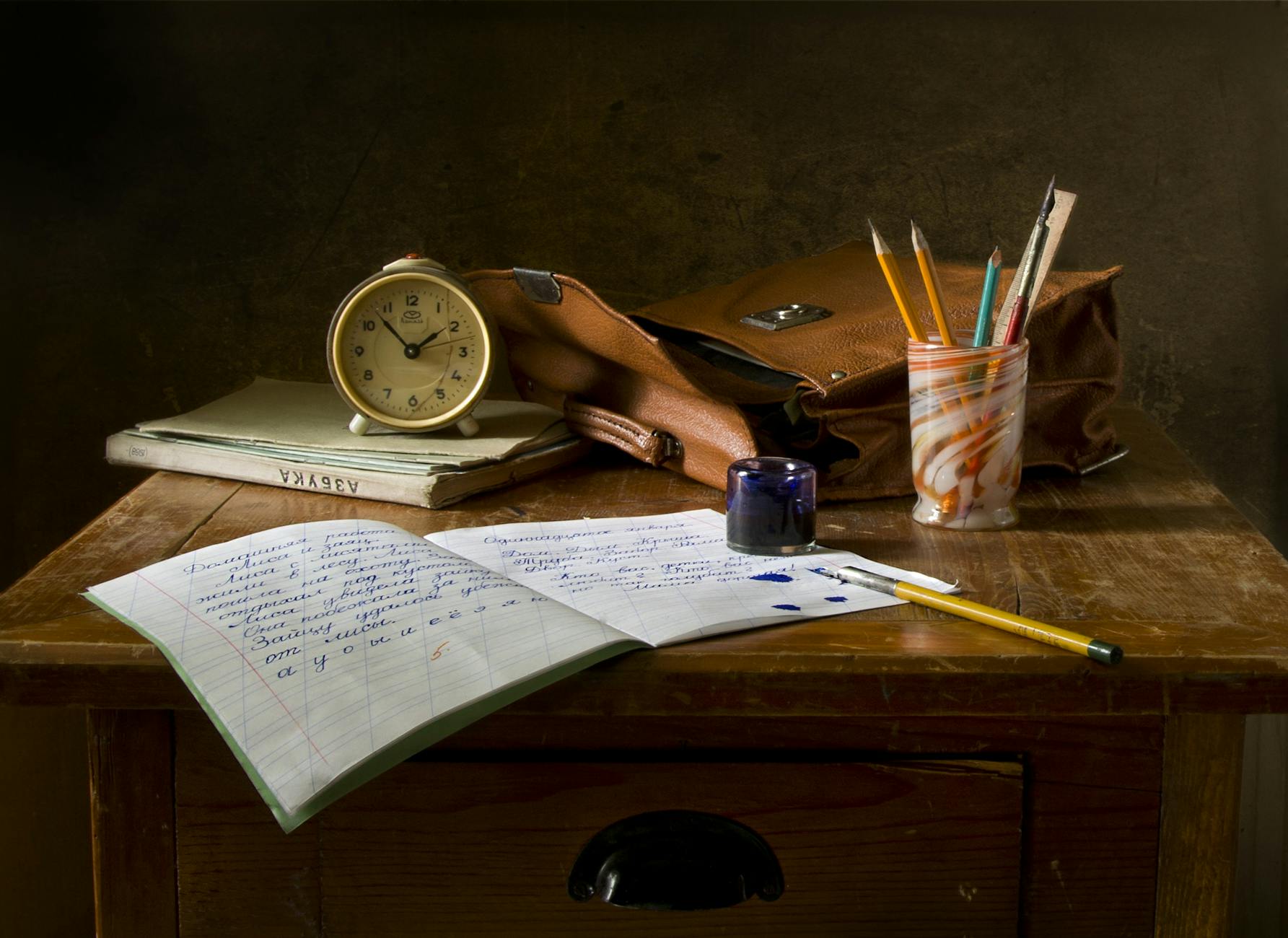
I like to write the first drafts of my stories by hand (longhand specifically) which may seem like an odd thing for a writer living in the twenty-first century to do. Why not type them out on a computer to write faster and write more? Why deprive yourself the luxury of the backspace key for correcting your mistakes the moment they occur? Do you not get hand cramps?

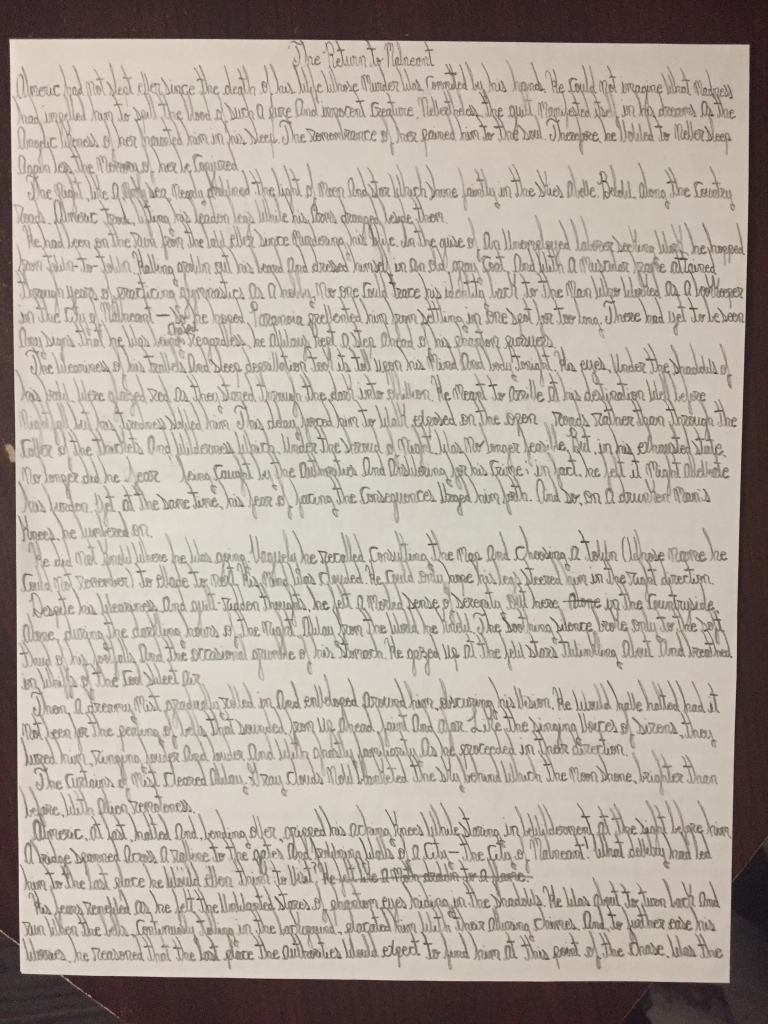


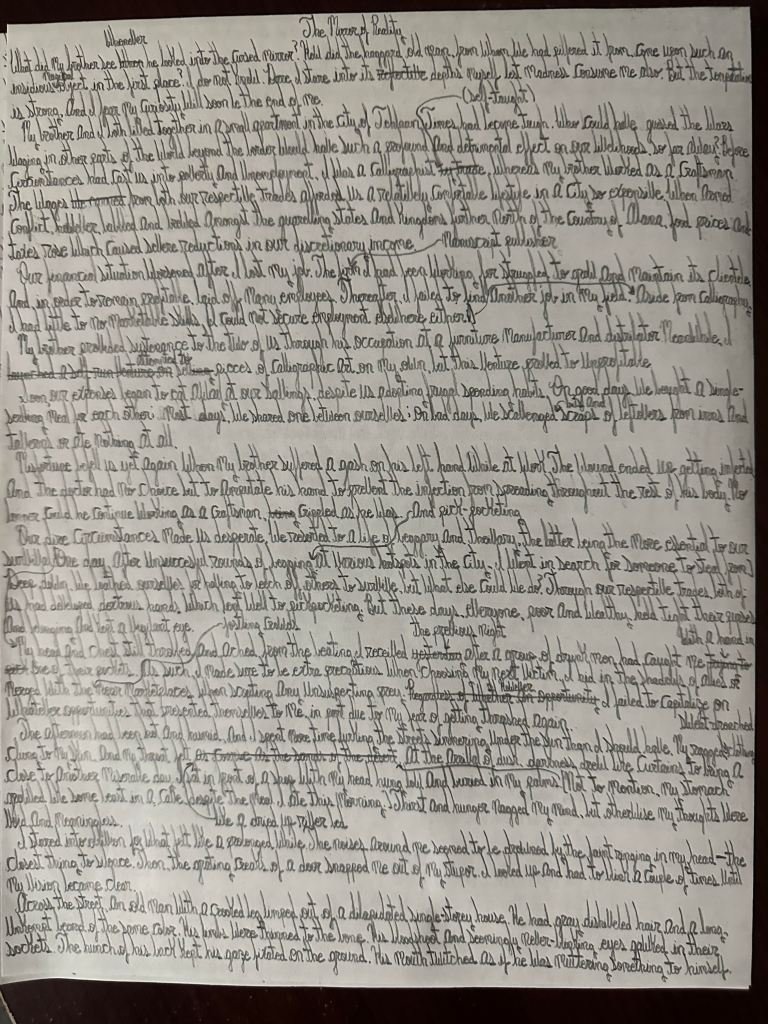
I did not always write my stories by longhand. When I first started taking creative writing more seriously as a passion rather than a hobby, I typed out my stories on a computer like most writers.
At the beginning of my creative writing career, I intended to become a novelist. I wrote my first novel while completing my first year at university for my bachelors of commerce degree. I managed to set aside about two-to-four hours each day to write while still staying on top of my studies (when I say ‘staying on top,’ I more or less mean not failing).
I committed myself to typing at least 2,000 words a day, a daily word quota that I, for the most part, consistently fulfilled. I finished the first draft of the novel (more than 100,000 words) within six months. The months thereafter I spent on multiple rounds of editing. I even dared to venture so far as to query publishers and literary agents, thinking I was God’s gift whose creative talent must—and will—be publicly displayed for the world to bask in…!
Ahem.
A couple of rejection letters and a period of self-reflection later, I decided to scrap the novel. I realized the quality of the novel and my writing skills in general were not as great as I believed and wanted them to be. As a young and overly ambitious writer with dreams of becoming the next JK Rowling or George RR Martin, this realization was a hard truth to swallow (and a topic for another blog article), but I moved on and immediately set my sights on writing a new novel.
By this point, I had finished my exams for the year and had the entire summer off. I dedicated the mornings and afternoons to the premature brainchild in my head—typing as much as 4,000 words a day. In less than a month, I reached the 50,000 word mark. But the manuscript progressed no further from there and has been untouched in the years since.
I burned out.
In the weeks before the ‘tipping point,’ writing felt like a meaningless chore. My creative capacity to develop scenes and characters became stifled. I was exhausted, to say the least, and could bend my will to write no more.
These two consecutive ‘failures,’ however, have been pivotal in shaping my growth as a creative writer and my writing philosophy.
After taking a break from writing for a month, I sat down at my desk to pick up the pen once more—this time literally. I went on to write the first draft of a 30,000 word novella by longhand, which took about eight months. Since then, I have written the first drafts of all of my stories by longhand while typing and editing later drafts digitally.
My previous experience in typing out novels played a big part in influencing my decision to write by longhand and to specialize in writing short stories. My schooling years have also played a role.
During my time in elementary school, teachers taught cursive writing in English/Language Arts classes. Back then, I hated writing in cursive. My hands would get cramped. The script, with its ‘fancy schmancy’ curvy letters, felt tedious and overly complicated to write. I remember my fellow classmates and I rejoicing about never having to write cursive again after graduating from elementary school.
Fast-forward to the seventh grade, where I resolved to re-teach myself cursive and submit all of my handwritten assignments and tests in cursive script. My twelve-year-old self might have made this decision, in part, out of vanity. The perceived second smartest student in my class wrote by longhand, so I figured I might as well do the same to score some intelligence points. I also thought that my teachers would be more inclined to give me a good grade if they read my work in cursive rather than print. At some point, however, I developed a genuine appreciation for the art of handwriting and sought to perfect it. Writing in cursive soon became as natural to me as writing in print—in fact, more so.
As I progressed through the education system to high school and university, typing everything on a computer, from notes to essays, became the norm. Save for a few in-person tests and exams as well as a little scribbling here and there, all of my written coursework was done on the computer.
I did not want to let my penmanship rot and wither within me unused. Creative writing served as the most practical and convenient outlet for me to continue exercising my cursive handwriting skills. Along with being its own mode of artistic expression, drafting my stories by longhand helped me improve my writing skills and the overall quality of my manuscripts.
Based on my experience, here are some of the benefits of writing by hand:
Improved sentences in the first draft
Correcting mistakes with an eraser or by crossing out words is more of a hassle and messier compared to pressing the backspace key. As a result, writing by hand encourages you to spend more time thinking about a sentence in your head before you write it out on paper. This, in turn, leads to you writing a first draft that requires less edits or rewrites afterward than if you had typed it (albeit at the cost of time).
Encourages you not to stress over word quotas
You cannot see your word-count in real-time when writing on physical paper unless you are committed (and crazy) enough to keep a written tally sentence-after-sentence.
Those who have read my previous article on writing productivity tips already know that I view word quotas as counterproductive. In my opinion, they tend to cause writers unnecessary stress and incentivises them to produce as much ‘word vomit’ as possible in a short period, thereby contributing to burnout and a poor first draft.
Not being able to see a real-time word count as you write helps alleviate some of the stress you might feel about how productive your writing sessions ‘should’ be. Writing by hand effectively promotes a holistic, quality-over-quantity approach.
Minimize distractions
Do your writing sessions consist more of watching YouTube videos or scrolling through Reddit than actual writing? The temptation to open another tab and do anything but write is strong. Do not ask how many times I got side-tracked by the internet while typing this blog article.
With nothing but your story in front of you, writing by hand on physical paper allows you to write with greater concentration. Though keep in mind, it is a good idea to have the computer or phone close by for looking up words and conducting on-the-spot research.
Greater feel
There is something more intimate about inscribing letters onto a physical page compared to just inputting them digitally by pressing keys. You derive a better sense that you are producing something tangible. You write in tandem with your thoughts at a steady pace. With less word-quota-induced stress and digital distractions, you get to better immerse yourself in your stories and bring them to life.
Besides, maybe you spend too much time staring at a screen for work or school and need a much needed break from technology when writing. In other ways I cannot articulate, writing by hand just feels more satisfying then typing on a computer.
Closing thoughts
Overall, writing has been a lot more fulfilling and enjoyable for me since I started writing the first drafts of my stories by longhand. That said, I cannot deny typing on a computer as being a much more convenient, accessible, and efficient option, especially for those who aspire to achieve commercial literary success, for which writing output is just as critical as writing quality.
As I embark on publishing and marketing my own works, I have considered forgoing writing my stories by longhand in exchange for the advantages of typing. Besides, some of the disadvantages of typing can be overcome through various solutions and strategies. Online distractions, for example, are manageable through a ‘focus mode’ feature on different word processors or even just good old-fashioned discipline.
Still, the feel of writing by longhand is irreplaceable to me. Perhaps I may opt for a hybrid approach, where I write the rough notes and outline of my stories by longhand while typing out the drafts on a computer.
But enough about me. What about you? Let me know in the comments below if you prefer to write your stories by hand or type them out.
 Scheherazade
Leave a comment